What Is a Sinking Fund? Sinking Fund vs Emergency Fund
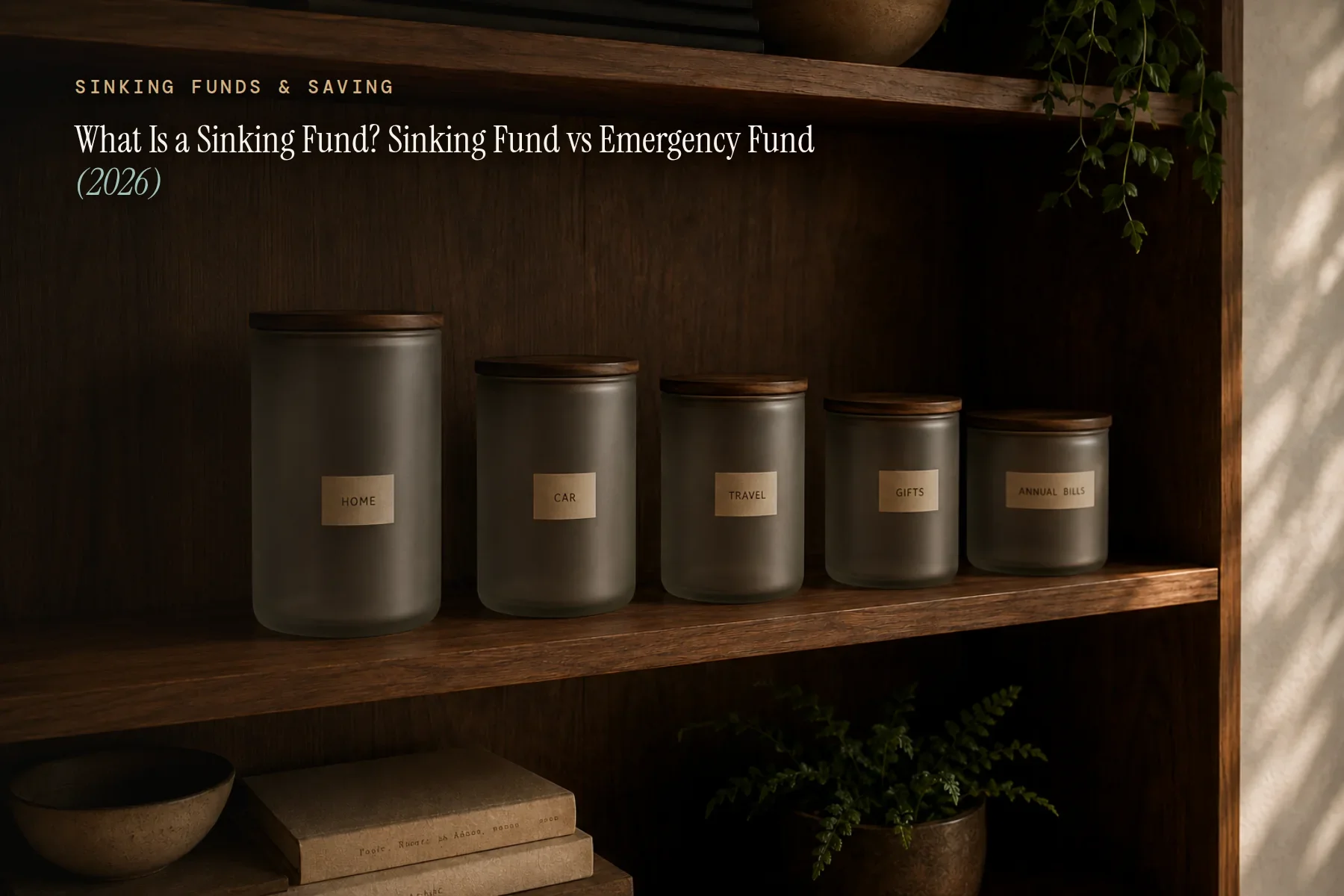
A sinking fund is money you set aside regularly for a specific expense you expect to pay in the future. It might cover a car service, annual insurance, Christmas or a holiday. Work out the cost, subtract what you have already saved, then divide the amount left by the number of paydays before you need it. An emergency fund covers unexpected costs or a loss of income.
The annual bill that knocks your budget sideways often had a date attached to it all along. A sinking fund gives that bill a place in your plan before it arrives.
Sinking fund vs emergency fund: what is the difference?
Both are savings, but they have different jobs. Keeping track of them separately helps you see how much is already committed and how much is available if something goes wrong.
| Question | Sinking fund | Emergency fund |
|---|---|---|
| What is it for? | An expected expense or planned purchase. | An unexpected expense or income disruption. |
| Examples | Annual insurance, school costs, a car service, gifts. | Urgent unplanned repairs or essential bills after losing income. |
| How do you set the target? | Estimate the cost and when you will need to pay it. | Consider your essential expenses and the financial shocks you might need to cover. |
| When do you use it? | When the planned expense falls due. | When an urgent, unplanned need arises. |
| What happens afterwards? | Restart for the next bill, or close the pot if the goal is finished. | Rebuild it as your budget allows. |
The US Consumer Financial Protection Bureau describes emergency savings as a reserve for unplanned costs and financial emergencies. The amount needed depends on your circumstances. Its guide to building an emergency fund explains how to choose a starting target.
Some expenses sit between the two. You can plan for routine car maintenance, but a sudden breakdown may cost more than your car pot holds. Use the pot for what it can cover and review the shortfall. The label should help you manage the money, not make you feel you have failed.
Which sinking fund categories do you need?
Start with expenses you can name and reasonably expect. Look through the past year's statements and the next year's calendar.
- Car: servicing, tyres, MOT or registration.
- Annual renewals: insurance, memberships and subscriptions you intend to keep.
- Family: school uniforms, supplies and planned activities.
- Christmas and birthdays: gifts, food and travel within a spending limit you choose.
- Home: planned maintenance or replacing an appliance you know is wearing out.
- Holiday or travel: transport, accommodation and spending money.
You do not need a separate account for every category. A few labelled pots, or one savings account with a record of each allocation, may be enough. MoneyHelper explains the approach in its guide to managing money using savings pots.
If recurring purchases are using up the money before you can set any aside, read The Hidden Spending Leaks Destroying Your Finances.
How much should you put in a sinking fund?
Use this calculation for each expense:
Contribution per payday = (target cost − money already saved for that expense) ÷ paydays remaining before payment
Count the paydays before the money must leave your account. If an insurance renewal is due before payday, that payday cannot fund it. For a holiday, use the booking or final-payment deadline where relevant.
These examples are illustrative. Each amount can be read in pounds or US dollars; they are separate examples, not currency conversions. Interest and changes in cost are excluded.
| Expense | Target | Already saved | Paydays left | Per payday |
|---|---|---|---|---|
| Christmas | 600 | 0 | 5 | 120 |
| Car service | 300 | 60 | 6 | 40 |
| Annual renewal | 240 | 0 | 12 | 20 |
For the car service, 300 minus 60 leaves 240 to find. Across six paydays, that is 40 each time. Once the bill is paid, you can begin saving for the next service with more time available.
The same calculation works if you are paid weekly, fortnightly or monthly. When income varies, treat the calculated contribution as a target to review, rather than an automatic transfer that could leave you short.
A complete sinking-fund plan with three payment dates
Individual pots can look affordable while their combined contribution is too high. Before setting up transfers, put every proposed fund on the same page. Here is a hypothetical household plan prepared on 10 September 2026. The household is paid on the 25th of each month, and the figures below are in pounds. A US reader can repeat the calculation using dollar amounts and their own dates; these are not currency conversions.
| Expense and payment date | Target | Saved already | Usable paydays | Required each payday |
|---|---|---|---|---|
| Insurance, 10 December 2026 | £480 | £120 | 25 Sep, 25 Oct, 25 Nov: 3 | £120 |
| Car service, 15 December 2026 | £300 | £60 | 25 Sep, 25 Oct, 25 Nov: 3 | £80 |
| Optional trip, final payment 10 January 2027 | £360 | £60 | 25 Sep through 25 Dec: 4 | £75 |
| Combined contribution during September–November | £120 + £80 + £75 | £275 | ||
The December payday cannot pay a bill due on 10 December. In this example the listed paydays are assumed to be the dates money is available; in your plan, use your employer's actual arrangements around weekends and public holidays. Allow time for transfers or provider processing before the deadline.
Apply the affordability check
Suppose £230 is available each payday after ordinary living costs, required debt payments and the household's other agreed commitments. The initial plan needs £275, so it is £45 over budget. Moving the same £230 among more pots cannot close that gap.
One possible revision is £120 for insurance, £80 for servicing and £30 for the trip. Over the four planned trip contributions, £60 already saved plus £120 new money produces £180. That supports a £180 trip budget, not the original £360. The household must reduce the trip cost or choose a later date. This illustration assumes insurance and servicing are costs the household has decided it needs to cover.
After the December bills, the first two pots need fresh targets. Do not automatically move all their previous contributions into spending: recurring bills have another cycle coming. If the household's available money falls below £200 before these bills, even its revised essential-cost plan needs attention.
Recalculate when a quote changes
Suppose the insurance estimate rises to £510 after the September transfer. The pot now holds £240: the original £120 plus September's £120. With two usable paydays remaining, the new requirement is (£510 − £240) ÷ 2 = £135 per payday. That is £15 more on each of the remaining two paydays, not £30 extra every month.
If the higher quote arrives only when payment is due and the pot holds £480, the shortfall is £30. A funded target was an estimate, not a guarantee of the provider's price. Check the new cost as soon as it becomes available and decide how any gap will be covered.
Record the payment and restart the pot
For a separate illustration, suppose the car service pot reaches £300 but the final bill is £270. Record £270 leaving the pot, leaving £30. If next year's estimated service is £330 and there are 12 usable paydays before payment, the next contribution is (£330 − £30) ÷ 12 = £25.
If the bill instead comes to £330, the £300 pot leaves a £30 gap. Covering that gap from another pot reduces what that other pot can pay for. Record both changes. Do not leave the old balance in your tracker simply because the bank account still contains enough money overall.
All calculations in this section exclude savings interest, account fees and further price changes. Include those if they materially affect your own plan. The point is a repeatable calculation: new target, current assigned balance, remaining paydays.
What if you cannot afford the contribution?
The calculation tells you what the deadline requires. It does not tell you what your budget can afford.
Suppose you need 300 for a bill in six paydays and can set aside only 30 each time. You will have 180, leaving a shortfall of 120. Knowing that now gives you time to check the cost, discuss payment options with the provider or adjust other plans.
For an optional purchase, reduce the target or move the date. For an essential bill, work out the shortfall early. Do not assume a partially funded pot makes the rest of the bill disappear.
If everyday costs already exceed your income, more savings categories will not solve that gap. Our guide to escaping living paycheck to paycheck looks at the wider monthly picture.
How to start a sinking fund in three steps
- Choose one expense. Begin with a known bill that matters to your household. Write down its estimated cost and payment date.
- Calculate an affordable plan. Deduct savings already assigned to it, count the remaining paydays and compare the result with your available money.
- Set it aside and review it. Use a labelled pot or a separate record. If your income is predictable, a regular transfer can help. Check the amount when your income, bill estimate or deadline changes.
MoneyHelper's guide to setting a savings goal explains how to balance your target, timeframe and affordable contribution.
What if the bill has no exact date or price?
Use the best available information and label it as an estimate. Last year's cost can be a starting point for a renewal; a current quote is better when available. For car repairs with no fixed date, choose a review target based on the work you expect, then check it as circumstances change. Do not pretend an uncertain repair has a precise annual cost.
If the target is already fully funded, the required additional contribution is zero. If no paydays remain before payment, dividing by the number of paydays is no longer useful: compare the money available now with the bill and deal with any shortfall. Neither case needs a negative contribution or a made-up deadline.
Where should you keep sinking funds?
For bills due soon, an accessible savings account or savings pot is a practical starting point. Check withdrawal restrictions, fees and whether the money will be available before the payment deadline. MoneyHelper's savings-goal guidance recommends savings products for short-term goals.
A savings pot is an organisational label, not a distinct legal guarantee. Check what type of account or product holds the money, who provides it and which protections apply in your country. A short payment deadline also makes access more important than a headline rate you cannot use without waiting or paying a penalty.
If several funds share an account, record their balances separately. An account showing 900 could contain 600 for insurance, 200 for the car and only 100 that has no job yet. Do not count the same money towards two targets.
Is it too late to start saving for Christmas?
Start with the amount you can afford this year and count the paydays before you will buy the gifts, food or travel. You may need the money well before Christmas Day.
For example, a spending limit of 300, with 60 already saved and three paydays remaining, requires 80 each payday. If that is too much, change the spending plan now. Next year, starting earlier gives you more contributions over which to spread the cost.
Should you build a sinking fund or an emergency fund first?
There is no single order that fits every household. A necessary bill due next month needs attention alongside the possibility of an unexpected expense.
Essential living costs, priority bills and debt commitments need to be considered before optional savings goals. StepChange advises covering priority debts and addressing high-interest debt when deciding whether to save for emergencies. See its emergency-saving guidance.
If your bills are manageable, you can plan for known expenses while building an emergency reserve at a pace your budget supports. The amounts will depend on deadlines, debt costs and the money you have available.
If payments are being missed or you cannot cover essentials, seek help with the overall budget. In the UK, contact StepChange; in the US, contact the National Foundation for Credit Counseling; in Australia, contact the National Debt Helpline.
Frequently asked questions
Is a sinking fund the same as a budget?
A sinking fund is part of a budget. The budget covers your income and planned outgoings; the sinking fund allocates money to an expense that falls outside your usual monthly bills.
How many sinking funds should I have?
Begin with one useful category and add others as needed. Keep the number small enough that you can track the balances and afford the combined contributions.
Do I need a separate bank account for each fund?
No. Labelled pots or a clear record within one savings account can work. What matters is knowing how much belongs to each expense.
What if the final bill is higher than my target?
Update the estimate when you receive new information and recalculate the remaining contributions. If there is not enough time or money, address the shortfall before the bill is due.
Should I feel guilty when I spend the sinking fund?
No. Using it for the expense you planned is the point. The balance falling after you pay the bill means the money has done its job.
Give the next bill a place in your plan
Choose one expense, find its payment date and calculate what you would need to set aside each payday. Then check that amount against your actual budget.
Related reading: Why You Can't Save Money and building a safety net from £0/$0.
Sources and calculation notes
- CFPB: emergency-fund purpose and individual needs
- MoneyHelper: managing money using savings pots
- MoneyHelper: setting a savings goal
- StepChange: saving for emergencies and debt priorities
- StepChange: debt support
- NFCC: US credit counselling
- National Debt Helpline: Australia
Sources checked 10 September 2026. Earlier publication dates on source pages are retained; a review date does not make an older source new research. Worked examples are hypothetical calculations prepared for this article, not customer results or tests of a proprietary app.
New here? Start free.
The Slow Money Starter Stack: spot the leaks, see where you stand, and pick one useful next move.
Get the Starter Stack