Money, thought through slowly.
Practical personal-finance guides, written the way the rest of Slow Money is: calm, honest, and free of hype and shame. No get-rich-quick, no hustle, no jargon for its own sake — just clear help for the money situations real people actually face, and permission to move at a sensible pace.
Everything here is written by Mel G. Prosper. It's educational — general information to help you think clearly, not regulated financial advice for your particular circumstances.
How it's organised
How the Journal is organised.
Guides are grouped by the situation you're in, so you can go straight to what's relevant:
Clearing debt
How to face what you owe without panic, choose an order that protects you first, and keep going — including the thinking behind the Snowball Plus™ method.
Money later in life
Catching up, planning for retirement, and making calm decisions when the timeline feels shorter than you'd like.
Sinking funds & saving
Setting money aside for the bills that always seem to "surprise" you, so they stop knocking your plan off course.
Budgeting that sticks
Frames for your month that survive contact with real life — the kind you keep, rather than abandon by the second week.
New here?
Start with the free Starter Stack.
If the guides have you ready to actually begin, the free Slow Money Starter Stack™ walks you through the first calm steps of getting your money in order. No cost — just an email so we can send it.
The Journal is educational and reflective — general information, not regulated financial advice or a recommendation for your circumstances. If you're in financial difficulty, free and confidential debt advice will help you more than any article: StepChange, National Debtline or Citizens Advice.
Waiting for Interest Rates to Fall? Test the Plan You Have
You do not need to predict the next interest-rate decision to review your money. Start with the rates and deadlines in your own contracts, then test what you can afford if they stay unchanged or rise. A future rate cut is a possible change to the plan, not money available to spend today.

What Is Slow Money? A Practical Plan for Debt, Saving and Investing
Money needs different jobs at different times. This guide explains the Slow Money Movement™ framework and shows how a hypothetical household can fund a reserve, a known bill and a long-term goal without hiding the trade-offs.

What Is a Sinking Fund? Sinking Fund vs Emergency Fund
An annual bill can be predictable and still catch you short. Give it a place in your plan with a sinking fund. Follow a complete example covering payment dates, affordable contributions, higher-than-expected bills and restarting the pot.
What Is Slow Passive Income? Test the Work Before the Promise
Slow passive income describes building an asset or repeatable source of revenue gradually. It is not a recognised investment category or a promise of steady earnings. Before starting, identify the capital at risk, the work that continues and the costs deducted from receipts. There is no reliable two-to-five-year timetable that applies to every project.

Mid-Year Money Reset: Rework the Months You Still Have
A mid-year money reset compares your current position with the bills and goals still ahead. Use actual balances, remaining payment dates and realistic income rather than restarting January’s plan unchanged. You can do it in June or later. The number of paydays before a deadline matters more than the name of the month.
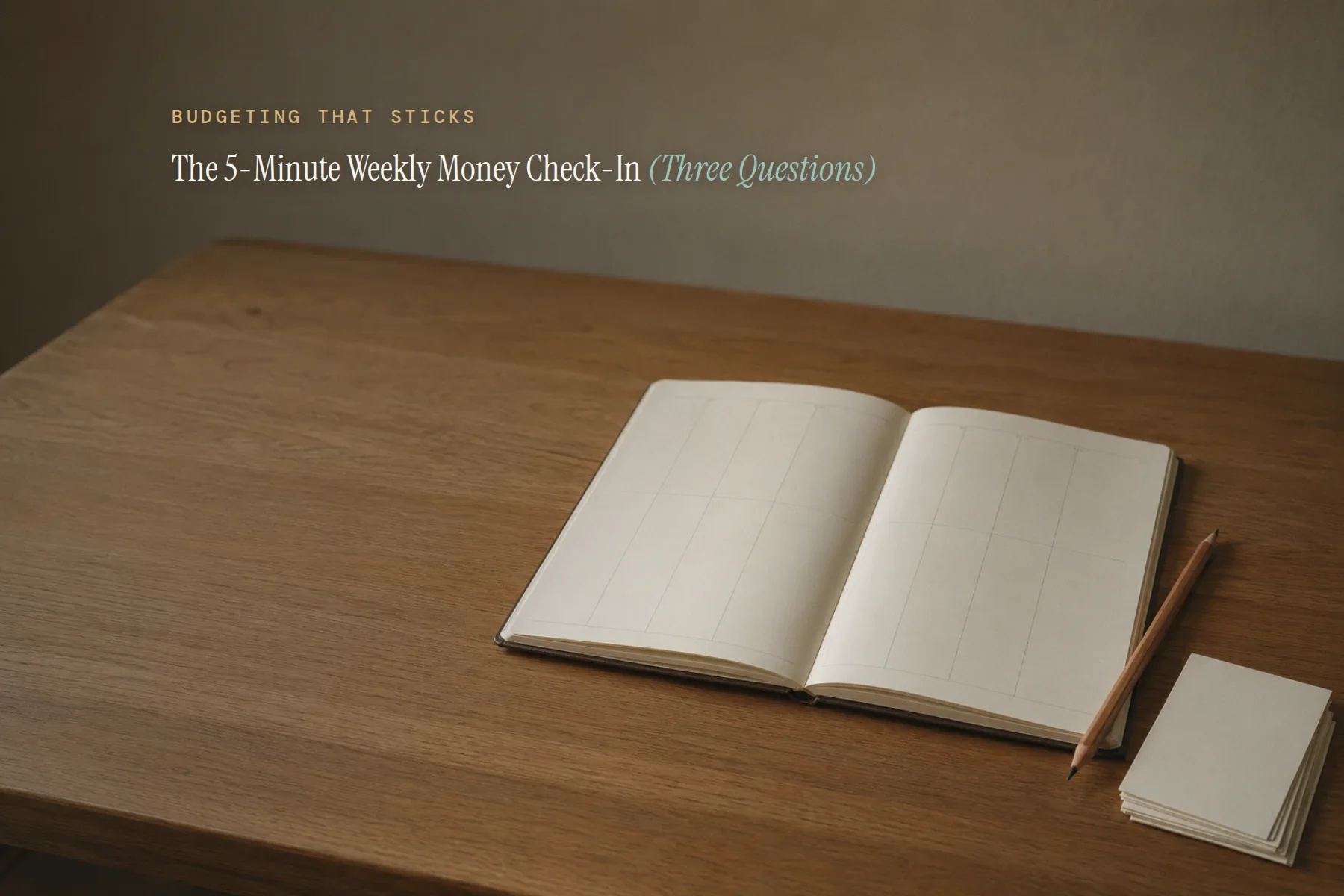
The 5-Minute Weekly Money Check-In: Three Questions
A weekly money check-in is a short cash-flow review, not a full budget. Check what is available, what will clear before the next income and the one action worth taking now.
Underconsumption: Buy Less Without Miscounting the Saving
Underconsumption is useful when it means buying fewer things you do not need and making better use of what you already own. Count the resulting saving against spending you genuinely planned. A delayed replacement, an avoided purchase and a cancelled recurring charge affect your budget differently. None requires going without essentials.A grounded take on the underconsumption trend: buying less isn't a smaller life, it's a more deliberate one. The trick is giving every unspent pound a job.
After the Hustle: Build a Money Plan You Have Energy to Keep
A money plan should fit the time, attention and cash you really have. This guide separates essential administration, steady progress and optional earning projects so urgency does not run the whole system.

Building Wealth When Money Is Tight: Start With Stability
When money is tight, wealth building begins with stability: protect essential commitments, make irregular costs visible, build accessible cash and create genuine surplus before investing.

The Budget-Panic Loop: Make the Next Money Task Smaller
The “budget-panic loop” is a descriptive phrase for checking money, feeling distressed and then avoiding the next check. It is not a diagnosis. A smaller task may make the admin more manageable, but it cannot remove an actual shortfall or treat an anxiety disorder. Start with the next deadline and the support you need to address it.

Snowball vs Avalanche vs Snowball Plus: Which Fits You
When you owe money and have nothing set aside, the next step depends on what your budget can support. Work through essential bills, debt costs and emergency cash, with practical examples to help you decide what needs attention first.
What Is the Debt Avalanche Method? A Worked Repayment Guide
Highest-interest-first sounds simple until you need to decide exactly what to pay. Follow a complete avalanche example, see how payments move between debts, and compare its interest cost and milestones with a snowball using the same budget.
What Is the Debt Snowball Method? Payments, Example and Costs
Clearing a small debt can give you an early milestone, but what happens to the payment next? Follow a complete snowball example, including the first cleared balance, the cost trade-off and what changes when your available income falls.
How to Stop Impulse Spending: A Pause, a Plan and a Purchase Log
A pause can make a purchase more deliberate, but abandoned baskets are not money in the bank. Use a checkout script and a complete two-week log to see the real cost of purchases, returns and waiting for a refund.

Why Can't I Save Money? Why It Feels So Hard Right Now and What Helps
Earning more does not always leave more to save. Compare what changed in your bills, separate annual costs from spare money and work out what your budget can actually support.
How to Stop Living Paycheck to Paycheck: A Practical Plan
To stop living paycheck to paycheck, first identify whether you have an income shortfall, a payment-timing gap, or irregular bills missing from the plan. Map the next two paydays and the costs due between them. Protect essential needs, address unaffordable payments, and build a buffer only from money the plan can genuinely support.
Why Budgeting Fails: 6 Checks to Repair Your Budget
Before starting another budget, find the first number that stopped matching real life. This guide repairs a household plan line by line, separates a timing problem from a genuine shortfall, and helps you choose one change to test.
Hidden Spending Leaks: Find and Stop Costs You No Longer Need
Small costs deserve a clear look, not automatic blame. Follow a complete recurring-spend audit, see why £305.88 of old costs produces £255 of savings, and check when the money is genuinely freed up.

I Have Debt and No Savings — What Should You Do First?
Start with what your budget can actually cover. A practical guide to essential bills, debt costs, emergency savings and the next decision that fits your situation.